Can you install a heat pump yourself in Ontario?
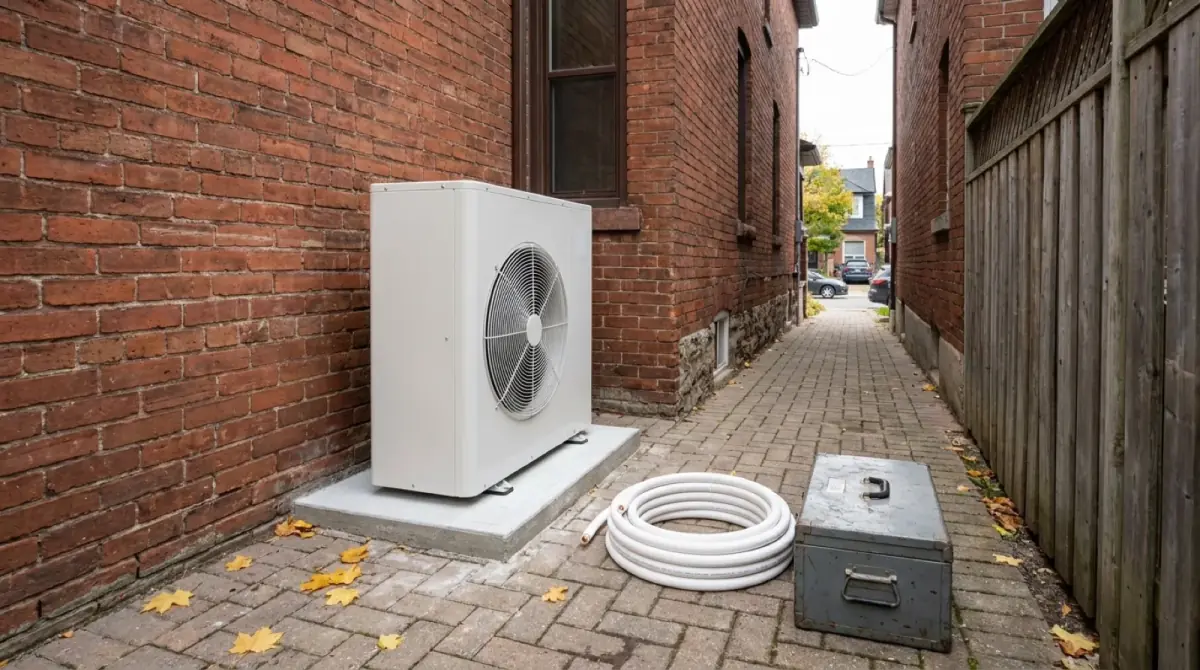
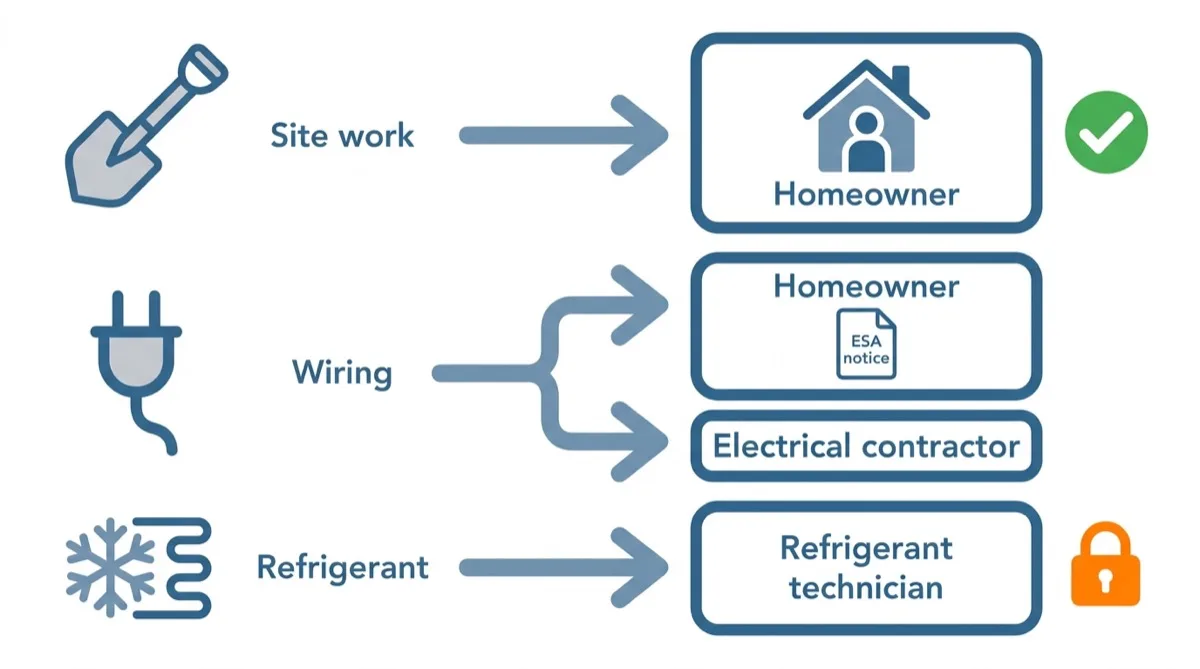
Mostly no. There is no single licence called heat pump installer, but installing and starting up a home heat pump falls in the scope of two compulsory trades. The published rules give homeowners no exemption. Refrigerant work needs a separate certificate on top. Only the wiring has a published homeowner route, through the Electrical Safety Authority.
Can a homeowner install their own heat pump in Ontario?
Not on the published rules. What Ontario regulates is the trades the job falls into, which the guide on checking a heat pump contractor also touches on. A compulsory trade is one that, by law, only a certificate holder or a registered apprentice (a trainee working under a registered training agreement) may practise. Ontario Regulation 876/21 lists refrigeration and air conditioning systems mechanic and residential air conditioning systems mechanic among its compulsory trades, alongside the electrician trades.
O. Reg. 875/21 sets out what those trades cover. The first trade's scope includes installing and starting up any cooling system or heating-cooling combination system used in a residential setting, a description that fits a heat pump. It also includes installing and connecting refrigerant piping. The residential trade has the same scope, limited to a system installed as an independent unit in a family dwelling, within set power and capacity limits. Skilled Trades Ontario's training standard for that trade lists heat pumps among the equipment its installation work covers.
Section 6 of the Building Opportunities in the Skilled Trades Act, 2021 sets the rule for those trades. No individual shall practise one unless they are a registered apprentice, hold a certificate of qualification in that trade, or are exempted by regulation. Section 7 applies the same conditions to anyone employed or engaged for the work. A person you hire for it has to hold that certificate or be a registered apprentice. The exemptions in Ontario Regulation 877/21 include none for homeowners. The rules also do not say whether owners working on their own house count as practising the trade, and this guide does not guess.
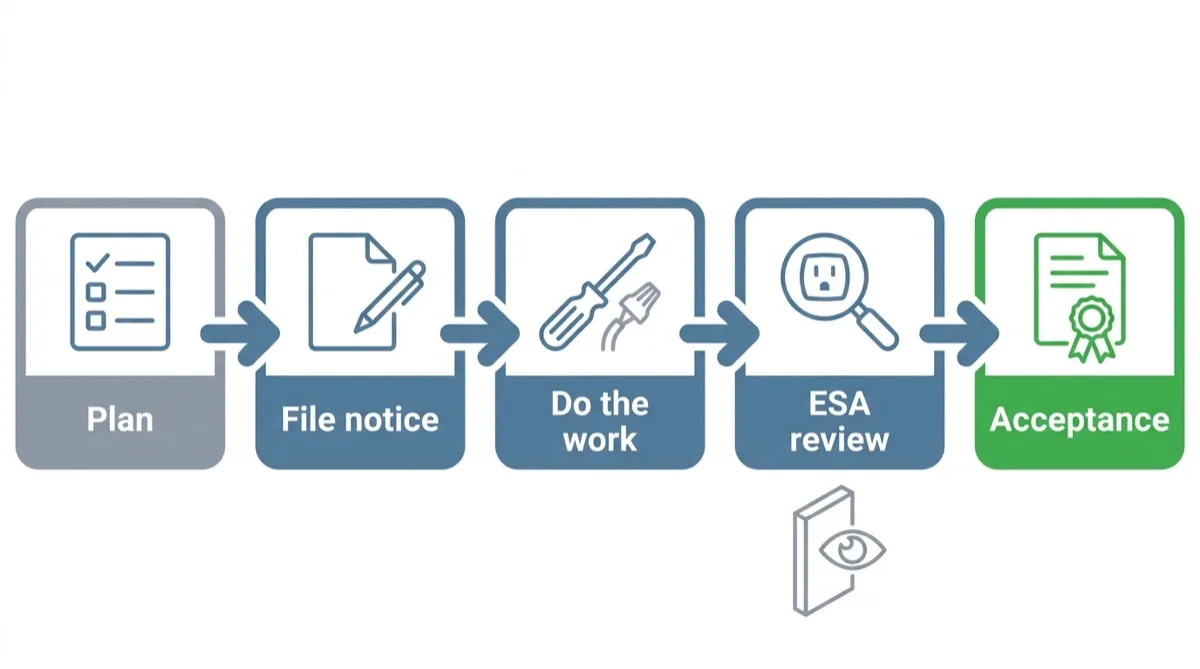
Two more rules sit on top. Ontario Regulation 463/10 requires its own refrigerant certificate, covered below. The Electrical Safety Authority (ESA) says homeowners may do electrical work in their own home once they file a notification with ESA and have the work reviewed. Nothing comparable is published for the refrigeration trades. The stages of the job, from mounting the units to starting the system, are laid out in what a heat pump install involves.
What Ontario's refrigerant regulation says
The rule sits in Ontario Regulation 463/10, Ozone Depleting Substances and Other Halocarbons, made under the Environmental Protection Act. It defines refrigeration equipment as "an air-conditioning, heat pump, refrigeration or freezer unit" designed to contain an ozone depleting substance or a halocarbon. Halocarbons, in this regulation, are fluorinated gases: the hydrofluorocarbons and perfluorocarbons it lists, including HFC-32, also known as R-32. A refrigerant is any liquid or gas that is or contains one of the listed substances and is used in refrigeration equipment.
Four sections do the work. Section 22 says no person shall service or test refrigeration equipment that contains a refrigerant without the section 34 certificate. The person also needs access to equipment that can collect and capture the refrigerant. Section 25 allows a person to refill refrigeration equipment only if that person holds the same certificate, among other conditions. Section 29 limits who may buy refrigerant in a container to resellers, people who hold the certificate, and their employers. Section 34 ties the certificate to completing a course on handling refrigerants and refrigeration equipment.
This regulation uses the words service, test and refill. It does not use install for this equipment and does not define service. It does settle three narrower points. Leak testing, adding refrigerant and buying a container of it are all closed to anyone without the certificate. A technician who adds refrigerant or runs a leak test during an install is doing work the regulation reserves for a certified technician, whatever trade certificate that person also holds.
What the Electrical Safety Authority lets a homeowner do
The ESA's page on do-it-yourself (DIY) electrical work says homeowners have the option to do electrical work in their home. It adds that even for little jobs a notification of work has to be filed with ESA before the work begins. The same page says the notification fee for many small residential projects can be less than $100. The work then has to be reviewed by ESA before it is covered up. Once it passes, ESA issues a Certificate of Acceptance, which the ESA describes as an important document for insurance and resale.
The permission is personal. The same ESA page says friends, family members or neighbours cannot perform electrical work in your home. A handy relative wiring the new circuit is not the route the ESA describes. Anyone paid to do the work has to be a licensed electrical contractor. The ESA's notifications page says that is the law when you hire someone for electrical work in your home. The ESA's hiring page adds that a general contractor should bring in a licensed electrical contractor for the electrical part. It also calls a contractor who asks you to file the notification in your own name a red flag.
The electrical side of a heat pump job is the new circuit that feeds the equipment, and in some houses the panel as well. Imperial Heating is a Toronto contractor listed in this index. Its price guide says older Toronto homes may need a panel upgrade at $1,000 to $3,000 to take a heat pump. It singles out homes where an electric water heater or EV charger shares the panel. A panel change is where the DIY option stops being a small job, so it is worth knowing whether it applies before any equipment is ordered.
What is left for a homeowner, and what it is worth
Mounting, piping, connecting and starting the units all sit inside the trade scope above, and the wiring comes with paperwork. What is plainly left is ordinary site work, such as clearing the spot and finishing around the wall opening.
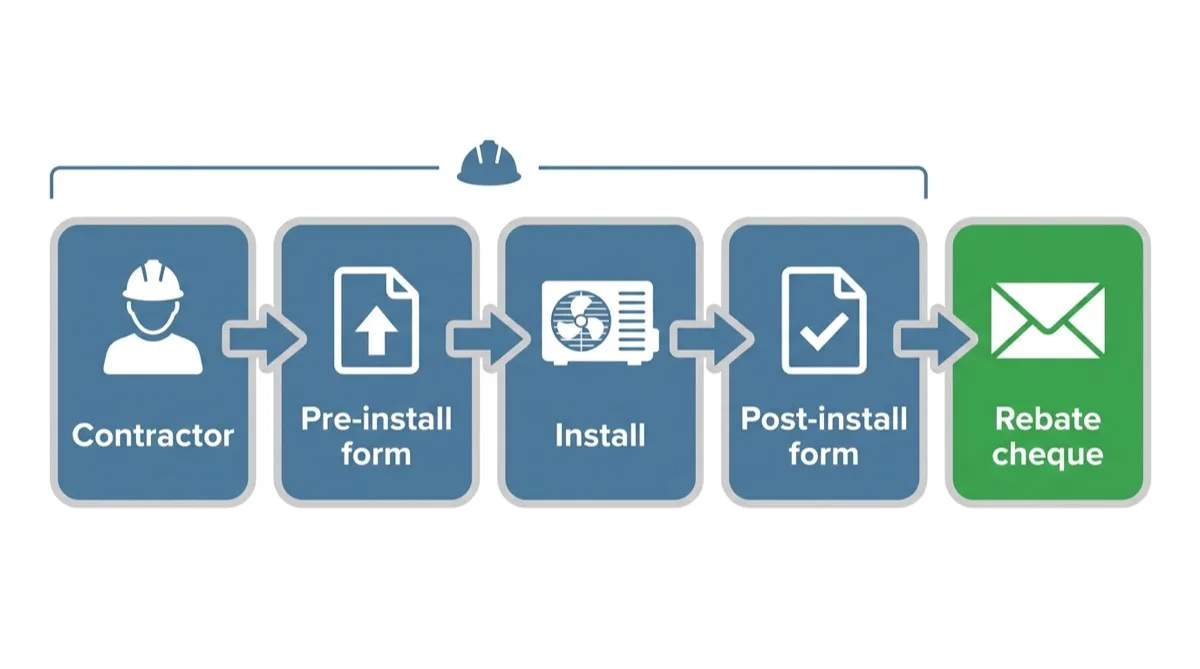
Home Renovation Savings is one reason a self-install rarely adds up. The program's heat pump page tells homeowners to choose a contractor from its list of participating HVAC contractors, who submits the pre-installation application. It says pre-approval is mandatory and that installations done before it are not eligible. The same contractor completes the post-installation application. An install with no participating contractor involved has nobody to file either one. How that list works is covered in what registered means for the Ontario rebate.
Megacity HVAC, another Toronto contractor listed in this index, gives a sense of the costs around the job. Its 3-ton cost breakdown prices old equipment removal at $100 to $300. The same breakdown lists permits with the ESA inspection at $200 to $400, both as lines inside its own quote rather than as public fees. Megacity HVAC puts the most common single-family install, a 3-ton air source unit reusing existing ductwork, at $7,500 to $10,000. Other published ranges sit on the heat pump installation cost page.
What this index can and cannot tell you about who does the work
HeatPumpIndex is a free directory. It installs nothing, no company can buy a better position on it, and a job sent through its quote form goes to one of the highest-scoring companies listed in the reader's area. Companies that list this work appear on the heat pump installation and ductless mini split pages. No record holds a licence number or a certificate of any kind, because the index does not collect them.
The checks this guide points at are therefore yours to make. Ask for the name of the technician who will install and start the system, and look them up on the Skilled Trades Ontario Public Register. Skilled Trades Ontario says anyone practising the residential air conditioning trade must appear there. Ask to see that technician's refrigerant certificate too. For the wiring, the ESA says a licensed electrical contractor has a 7-digit ESA licence number on its vehicles, business cards and estimates.
Reviews describe service, not certificates. Reading Ontario heat pump reviews covers what they can and cannot show.
Can you install a heat pump yourself in Ontario: frequently asked questions
Do you need a trade certificate to install a heat pump in Ontario?
- Anyone you hire for it needs one or must be a registered apprentice. Ontario Regulation 875/21 puts installing and starting up a residential heating-cooling system in the scope of two compulsory trades. The skilled trades law bars hiring anyone else for that work. The published rules give no homeowner exemption. They also do not say whether owners working on their own house count as practising the trade.
Can I buy refrigerant to top up my own heat pump in Ontario?
- Not in a container unless you hold the certificate. Section 29 of Ontario Regulation 463/10 allows containers of refrigerant to be sold only to resellers, to people holding the section 34 certificate, and to their employers. Section 25 also reserves refilling refrigeration equipment for a certificate holder.
Can a relative who is an electrician wire my heat pump as a favour?
- No, according to the Electrical Safety Authority. Its DIY page says friends, family members and neighbours cannot perform electrical work in your home. The ESA's hiring page says electricians work through a licensed electrical contractor and cannot be hired directly.
Does a DIY heat pump install need an ESA notification?
- Yes, for the electrical part of the job. ESA says a notification of work has to be filed before any electrical work starts, even a small job, and the work has to be reviewed before it is concealed. ESA says the fee for many small residential projects can be under $100.
Can I get the Home Renovation Savings rebate on a heat pump I install myself?
- The program page offers no route for it. Its steps have a participating HVAC contractor submit both the pre-installation and the post-installation application, and pre-approval is mandatory. Check the program page before buying any equipment.
Does this directory show which companies hold a refrigerant certificate?
- No, it holds no licence or certificate fields. A record carries service categories, area, contact details and ratings. Look the technician up on the Skilled Trades Ontario Public Register, ask for their refrigerant certificate, and ask for the ESA licence number of whoever does the wiring.
Where these figures come from
Ontario Regulation 876/21 classifies refrigeration and air conditioning systems mechanic and residential air conditioning systems mechanic as compulsory trades, alongside the electrician trades.
Ontario Regulation 875/21 puts installing and starting up any cooling or heating-cooling combination system in a residential setting, and installing and connecting refrigerant piping, in the refrigeration and air conditioning systems mechanic's scope, and gives the residential air conditioning systems mechanic the same scope for independent units in a family dwelling within set limits.
Skilled Trades Ontario's training standard for the residential air conditioning systems mechanic trade lists heat pumps among the equipment covered by its installation work.
Section 6 says no individual shall practise a compulsory trade unless they are a registered apprentice, hold a certificate of qualification in that trade, or are exempted by regulation, and section 7 applies the same conditions to anyone employed or engaged for the work.
The exemptions from section 6 of the Act listed in Ontario Regulation 877/21 include none for homeowners.
Ontario Regulation 463/10 says no person shall service or test refrigeration equipment that contains a refrigerant without the section 34 certificate, allows refilling and the purchase of containers of refrigerant only for certificate holders (with resellers and employers for purchases), defines refrigeration equipment to include heat pump units, and lists hydrofluorocarbons and perfluorocarbons such as HFC-32 (R-32) as halocarbons.
The ESA says homeowners have the option to do electrical work in their own home, must file a notification of work before starting even for little jobs, says the notification fee for many small residential projects can be less than $100, and says friends, family members or neighbours cannot perform electrical work in your home.
The ESA says that by law, anyone you hire for electrical work in your home has to be a licensed electrical contractor.
The ESA says a licensed electrical contractor has a 7-digit licence number (which it writes as ECRA/ESA) shown on its vehicles, business cards and estimates, and that a contractor asking you to file the notification in your name is a red flag.
Imperial Heating says older Toronto homes may need a panel upgrade at $1,000 to $3,000 to take a heat pump.
Home Renovation Savings has a participating HVAC contractor submit the pre-installation and post-installation applications, and says pre-approval is mandatory.
Megacity HVAC, a Toronto contractor, lists old equipment removal at $100 to $300 and permits with the ESA inspection at $200 to $400 as lines in its cost breakdown for a 3-ton install, and puts the most common single-family install, a 3-ton air source unit reusing existing ductwork, at $7,500 to $10,000.
Skilled Trades Ontario says anyone practising the residential air conditioning systems mechanic trade must hold a registered training agreement or a (provisional) certificate of qualification and appear on its Public Register.
The Skilled Trades Ontario Public Register can be searched to confirm that a tradesperson or apprentice can legally work in a compulsory trade.