Renting or owning a heat pump in Toronto, and what it does to the rebate
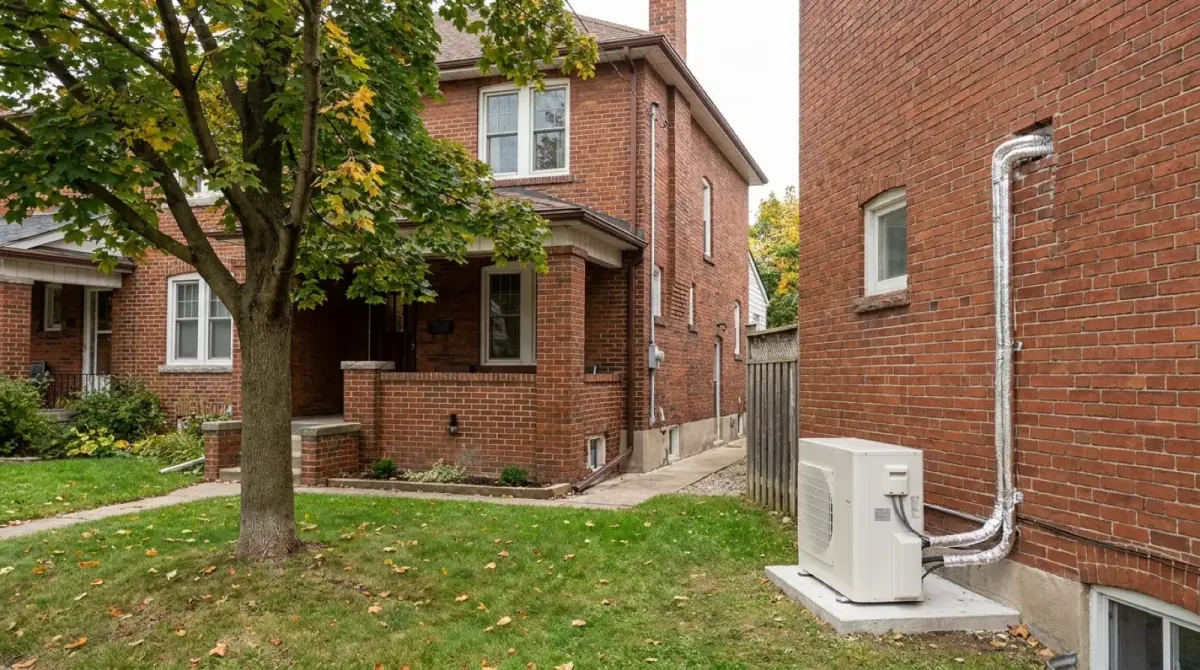
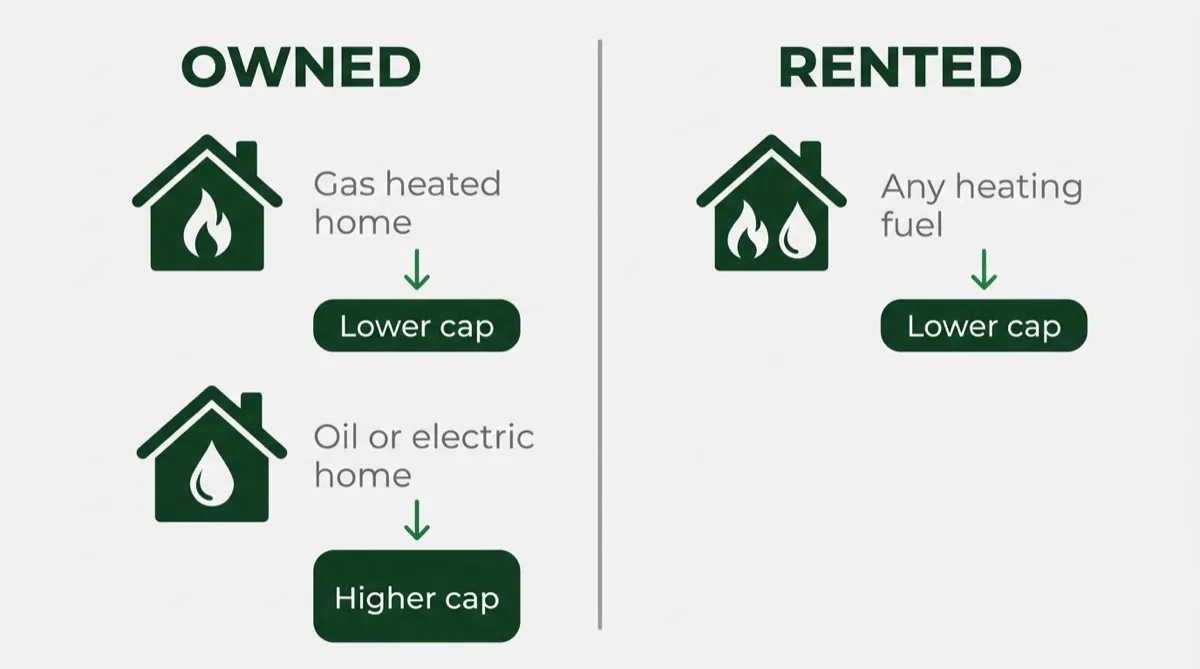
Renting a heat pump caps the Ontario rebate at up to $2,000 for a cold climate air source unit and $3,000 for a ground source one, whatever heats the home. Owning pays the same in a natural gas home, and up to $7,500 or $12,000 in a home heated by electricity, oil, propane or wood.
Does renting a heat pump change the Ontario rebate?
It does, but only in some homes. The rebate covers two kinds of system: a cold climate air source heat pump, which pulls heat from outdoor air and is built to keep working in deep cold, and a ground source (geothermal) system, which draws heat through pipes buried in the ground. Home Renovation Savings, the program Enbridge Gas and Save on Energy run together, sets its heat pump rebate by the fuel that heats the house today, and it gives renting a row of its own. The rebate and registered contractor guide explains how the program and its contractor list work. This page covers only what renting changes.
The Home Renovation Savings heat pump page sets the owned rates by fuel. In a home heated by natural gas, a cold climate air source heat pump earns $500 per ton, up to $2,000. In a home heated by electricity, oil, propane or wood, it earns $1,250 per ton, up to $7,500. A ground source system earns $3,000 in a natural gas home and $2,000 per ton up to $12,000 in an electricity, oil, propane or wood home.
The rental row on the same page is headed "Looking to rent a heat pump?" and applies to every fuel: $500 per ton up to $2,000 for cold climate air source, and $3,000 for ground source. In a natural gas home, then, a rented system gets the same rate per ton and the same cap as an owned one.
In a home heated by electricity, oil, propane or wood, the owned air source ceiling of $7,500 sits $5,500 above the rental ceiling of $2,000, and the owned ground source ceiling of $12,000 sits $9,000 above the rental $3,000. Those two gaps are this site's subtraction, not figures the program prints.
A ton here is a unit of heating capacity, which the BTU to tons converter explains, and the program measures it at a mild outdoor temperature of 8.3°C. A small system lands below both ceilings. For a unit rated at 3 tons, this site's arithmetic gives $1,500 rented against $3,750 owned in an oil-heated home.
Which homes lose rebate money by renting, and who can claim
A household on natural gas can set a rental beside a purchase without the rebate tipping the result, because both paths pay at the same rate. The choice then rests on the installed price against the rental agreement's terms, and the heat pump versus gas furnace comparison covers the running cost, cold weather and ductwork side of that decision. A house heated by electricity, oil, propane or wood is different: only ownership opens the higher tier, so renting there costs real rebate money.
Three conditions on the program's pages apply whichever path you take. The applicant has to own the home, and the program's help page says a tenant cannot take part; where an owner has tenants, the owner applies. The same help page limits the rebate to a first-time installation of a heat pump used to heat the home, so a home that already has one is not eligible. And the unit has to be an active model on Natural Resources Canada's qualified products list for cold climate air source or ground source heat pumps.
Timing decides the rest. The program page says a participating contractor submits a pre-installation application, installation waits until the program accepts it, and work done before that earns nothing. The rebate register finder shows which companies listed here near a postal code appear on the program's own contractor directory.
What owning costs up front in the GTA
A rental is weighed against a one-time installed price, so that price comes first. Imperial Heating's 2026 Toronto price guide puts a standard air source heat pump at $5,000 to $12,000 installed and a cold climate model rated to -25°C at $8,000 to $15,000. EcoFrost Heating's 2026 guide for Toronto and Mississauga prices standard ducted air source units at $5,500 to $11,000 and cold climate rated models at $6,500 to $14,000. Megacity HVAC's 2026 Toronto guide puts the most common single-family install, a 3-ton air source unit reusing existing ductwork, at $7,500 to $10,000.
One add-on often sits outside those ranges. Imperial Heating says older Toronto homes may need an electrical panel upgrade at $1,000 to $3,000, especially where an electric water heater or EV charger shares the panel. Ask whether a rental offer includes that work or leaves it with you.
The installation cost page holds every published range with its conditions, and the heat pump cost calculator shows the range for a chosen system type and floor area. None of the price guides behind these figures publishes a monthly rental rate for a heat pump. Imperial Heating and Furnace King both mention rent-to-own or lease-to-own options on their guide pages without printing one.
Is it better to rent or buy a heat pump in Toronto?
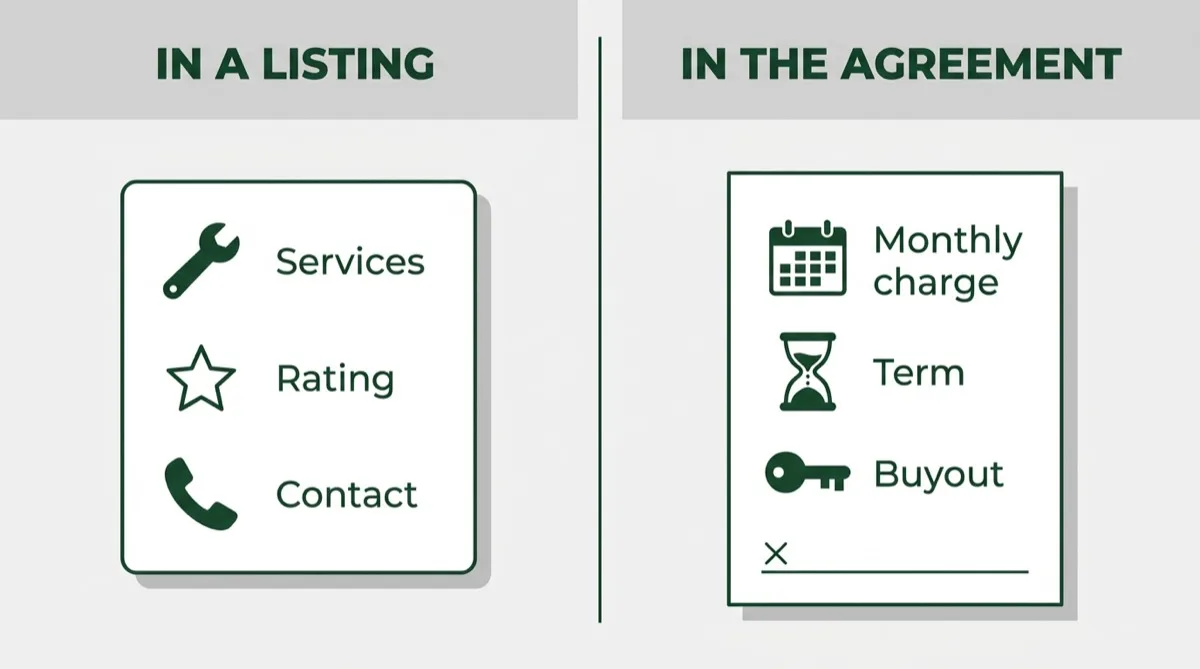
No published source on this site answers that for a heat pump, because the rental side lives in the agreement. The numbers that decide it are the monthly charge, the length of the term and the cost of ending early, and this index holds none of them for any company. What can be said is where the answer gets settled: in writing, before you sign.
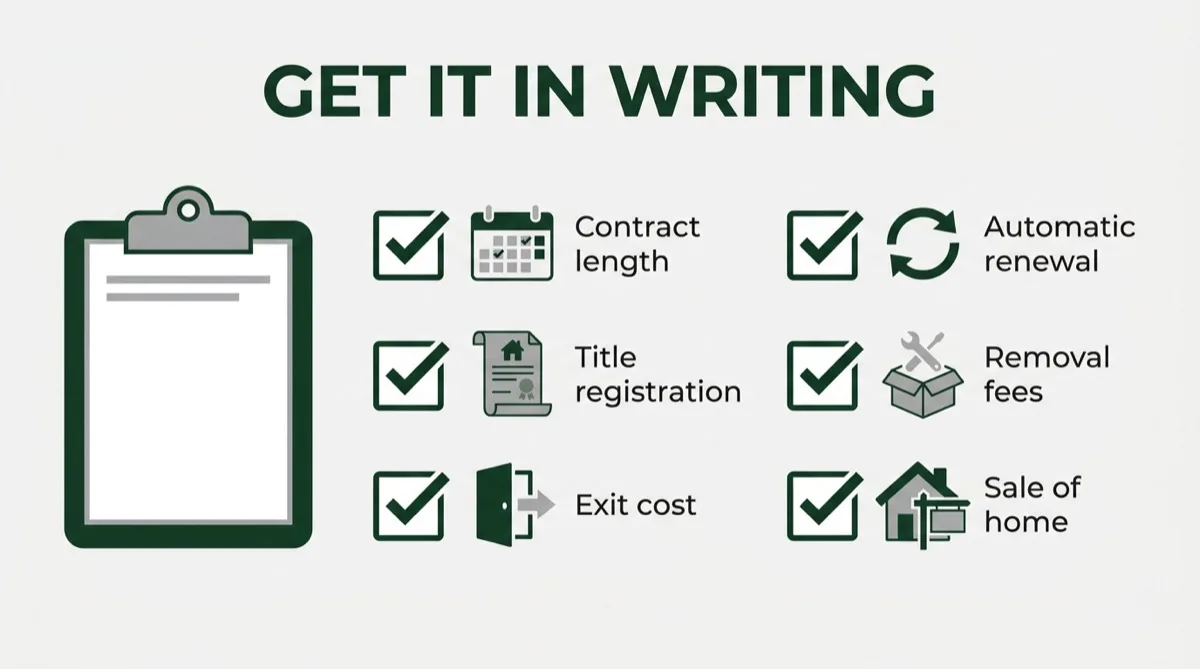
Ontario's consumer protection page on door-to-door sales and home service contracts lists questions to ask before signing and to get answered in writing. How long is the contract? Will the company register a security interest on the title to your home? When and how can you get out, and what does cancelling cost? Will it renew automatically without your consent? Are there fees for removing the old equipment or installing the new? Will you have to transfer the contract, or pay cancellation fees, if you sell the home? What warranty does the business offer?
The same page warns that signing with a new supplier for something like a water heater rental means ending the contract with your current one, and that ending it and removing the old equipment may carry fees. It also says a buyer may take on an existing appliance contract that comes with a home. For a household that already rents a water heater or furnace, that exit cost belongs in the comparison before any heat pump price does.
A purchase quote answers a different set of questions, set out in the guide to what belongs in a heat pump quote. A monthly figure beside an installed price only means something once both sets have written answers.
What Ontario's rules already say about heating rental contracts
Ontario's door-to-door sales page says that, under the Consumer Protection Act, 2002, certain products cannot be offered or sold at your home unless you started the transaction. The list names furnaces, air conditioners, water heaters and duct cleaning, among others. It also covers any good or service that performs or combines those functions, and the province's page for businesses gives "an HVAC system" as its example. If you call a company for a repair, maintenance or an energy assessment, it cannot sign you to a new contract for those products during that visit. It can only leave information.
Where you did invite the company and signed for a restricted product, the page gives a 10-day cooling-off period that starts when you receive a written copy of the agreement. A contract signed because of restricted door-to-door marketing is void, and you can keep the goods without obligation. The page adds that cancelling can still leave costs, including rental payments and the company's removal expenses, where you asked for the equipment to be installed inside those 10 days.
Liens on title changed in 2024. A Notice of Security Interest is a charge a company registers on a home's title to secure equipment it supplied. Ontario's page on these notices says the Homeowner Protection Act became law on June 6, 2024. It bans registering them for consumer goods such as a water heater, air conditioning equipment or a furnace, and treats existing consumer notices as expired. The same page says the ban does not cancel an existing contract: the business keeps its rights under it and may be able to repossess the equipment in certain circumstances.
Home Renovation Savings says neither Enbridge Gas nor Save on Energy solicits homeowners by phone or door to door. The guide to checking a heat pump contractor covers what can be confirmed about the company itself.
What this index can and cannot tell you about a rental offer
No field in the 618 records says whether a company rents equipment, sells it, or does both. Some records carry text from the company's own website that mentions rentals or lease-to-own offers, but the index does not sort or filter by it. A record holds contact details, a Google Maps business type, the site's service categories, opening hours, a rating and a review count. There is no field for rental terms, monthly rates, contract length, buyout cost or warranty. HeatPumpIndex lists companies and does not sell, rent or install heat pumps.
The categories describe services and say nothing about payment arrangements. Of the 618 records, 221 are listed under heat pump installation and 28 under geothermal heat pumps. Willowdale and Islington City Centre hold the most installation records of any area.
A rating reflects customer experience and carries no contract terms. Across the 607 rated records the mean rating is 4.82 and the median 4.9, so stars alone separate few companies; the guide to reading Ontario heat pump reviews explains what to look at instead. Use the index to find companies working near you, then put the contract questions above to each one and compare the written answers.
Renting or owning a heat pump in Toronto: frequently asked questions
How much rebate does a rented heat pump get in Ontario?
- Up to $2,000 for air source, or $3,000 for ground source. Home Renovation Savings applies those rental amounts whatever fuel heats the home, with air source paid at $500 per ton of rated capacity. An owned system gets the same amounts in a natural gas home, and up to $7,500 or $12,000 in a home heated by electricity, oil, propane or wood.
Does renting cost a gas-heated Toronto home any rebate?
- No, not at the current program rates. Home Renovation Savings pays a natural gas home $500 per ton up to $2,000 for a cold climate air source unit, and $3,000 for ground source, whether the equipment is owned or rented.
Can a tenant claim the Ontario heat pump rebate?
- No, only the property owner can take part. The Home Renovation Savings help page says a tenant cannot participate, and that where an owner has tenants, the owner must apply.
Can I cancel a heating equipment rental contract in Ontario?
- Often yes, within 10 days of receiving the written copy. Ontario's door-to-door sales page gives that cooling-off period on contracts for restricted products such as furnaces, air conditioners and water heaters. Rental payments and removal costs can still apply if you asked for installation inside those days.
Does this index show which companies rent heat pumps?
- No, it has no field for that. Records hold contact details, service categories, hours, ratings and review counts, but no rental terms, monthly rates, contract lengths or buyout costs. Some companies' own website text mentions rentals, which is worth reading on their sites.
Where these figures come from
Owned: cold climate air source $500 per ton up to $2,000 in a natural gas home and $1,250 per ton up to $7,500 in an electricity, oil, propane or wood home; ground source $3,000 (natural gas) and $2,000 per ton up to $12,000 (electricity, oil, propane or wood). Rented, any fuel: $500 per ton up to $2,000 air source and $3,000 ground source; pre-installation application required before installation.
A tenant cannot participate and where an owner has tenants the owner must apply; the rebate is for a first-time installation of a space heating heat pump; Enbridge Gas and Save on Energy do not solicit by phone or door to door.
Standard air source heat pump $5,000 to $12,000 installed, cold climate model rated to -25C $8,000 to $15,000, and a panel upgrade in older Toronto homes $1,000 to $3,000.
Standard ducted air source units $5,500 to $11,000 and cold climate rated models $6,500 to $14,000.
The most common single family install, a 3 ton air source unit with existing ductwork, runs $7,500 to $10,000.
The guide mentions rent-to-own programs among its financing options and publishes no monthly heat pump rental rate.
Restricted door-to-door products include furnaces, air conditioners and water heaters; a 10-day cooling-off period starts on receipt of the written agreement; the page lists questions to ask before signing, including contract length, security interests, exit costs, automatic renewal, removal fees, transfer on sale and warranty.
The restricted list covers any good or service that performs one or more of the listed functions, for example an HVAC system.
The Homeowner Protection Act became law on June 6, 2024, bans consumer Notices of Security Interest and deems existing ones expired, without cancelling existing contracts.